Loading...

Loading...
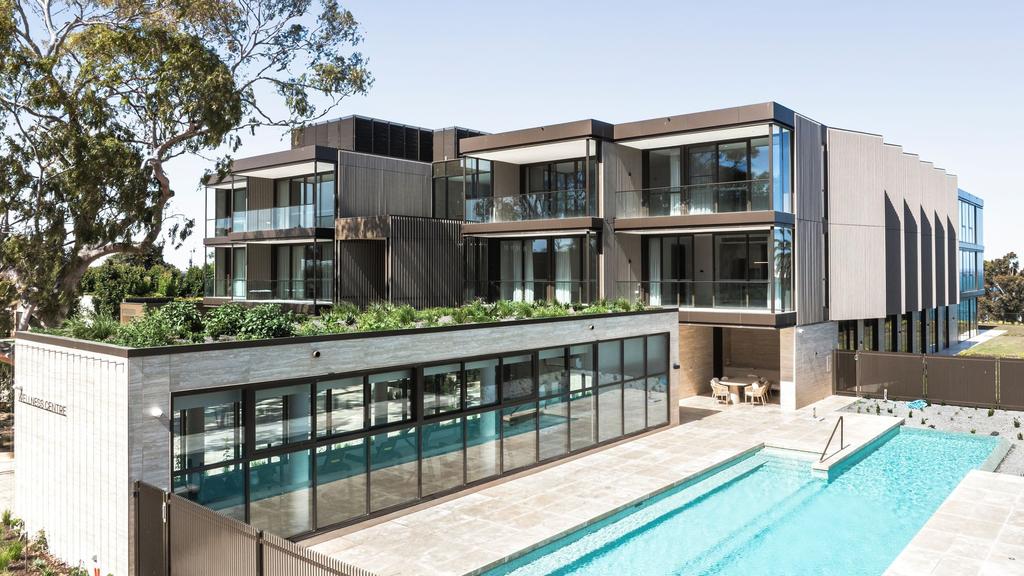
The first residents have moved in and are enjoying the amenities on offer at the Stella Maris residential development at Rippleside. To date, 80 per cent of the project’s 53 luxury waterfront homes have sold off-the-plan, with the remaining residences coming on to the market with John Moran of Whitford Property and Jodie Bliss Real Estate this summer. The project from Melbourne-based developer Monno – which is backed by Geelong businessman Robert Costa – lives up to its billing as a landmark waterfront residential address, even as workers busily completed the finishing touches. The vision to transform the 1848 St Helens mansion – one of the last remaining Geelong homesteads predating the Gold Rush which was also the Sisters of Mercy’s Stella Maris convent – into a luxury community has clearly come together. An exclusive tour of the development with Monno managing director Geno Hubay and Rothelowman principal Chris Exner and senior associate Nick Williams puts the 1.2ha precinct into perspective. There is so much to see beyond the quality apartments with 3m ceilings and high-end finishes, whether it’s looking out from the 3.5m-high, third-storey window of a Park Row townhouse across the centre of the community, across a wide paved area with gardens and a wellness centre including a pool, gym and steam room, or through the central areas of Nautica House. Every view line has been considered, offering glimpses of the bay or landmark trees at each level. Residents will enjoy the relative tranquillity now that most of the heavy construction work has finished. Though workers will return next year when the St Helens mansion is reimagined as a private home, to be sold separately. The project has surprised the architects as it’s evolved as a building site, with bay glimpses and sight lines designed on paper even better in person. “I think the master plan as a whole, how the buildings actually do fit pretty comfortably around the old homestead and around the trees and the way that you move through the site just feels natural. You know, nothing seems forced,” Mr Exner said. “We can get down to looking at the level of finish and the how the detail’s being pulled off. “But we don’t want to lose sight when you sit and look back at the whole master plan and go, you know what, the whole thing it all just works.” Mr Hubay said he was blown away that 80 per cent of the homes had sold, including a $5.95m record sale, in a market at that price point Geelong buyer’s don’t typically buy off the plan. “It’s come up better than we could have imagined, the quality,” he said. “We always compare back to the original renders but the finished results are better.” Mr Hubay said the project was the best residential project Geelong had ever seen. “It’s a benchmark that simply won’t be repeated – from the irreplaceable waterfront setting to the depth of design thinking behind every residence.”
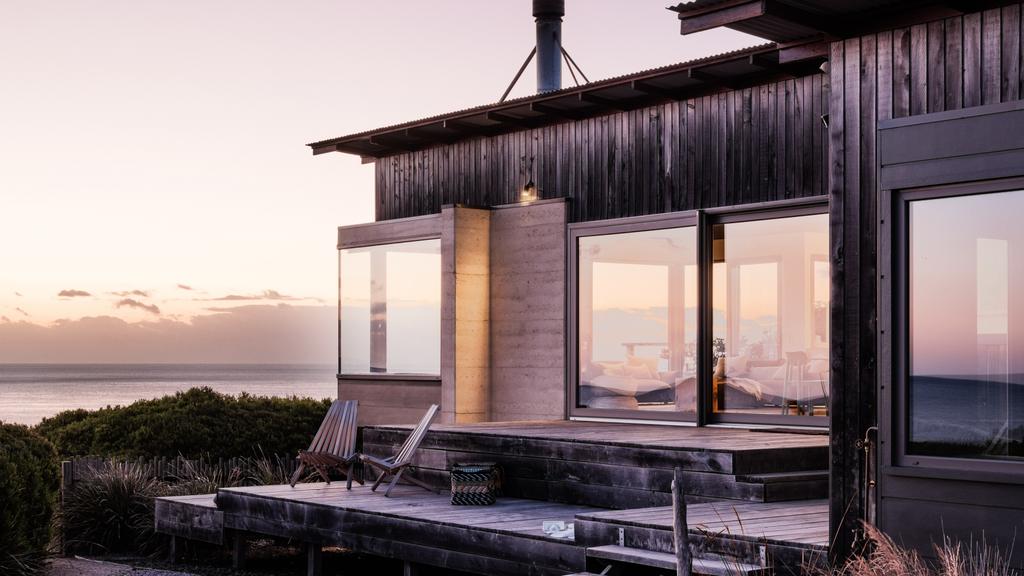
It took a sale of more than $3m to have a chance at cracking Tasmania’s top 10 sales of 2025. Figures from realestate.com.au show 16 homes sold for more than $3m. These were single dwellings up to 10ha, not farms. About half are located in Hobart. While Tasmania’s median prices are highest in Battery Point and Sandy Bay, the top three sales were in other areas. The most expensive property was a coastal home in Cooper St, Seymour. It was sold by Jo Oliver from Harrison Agents Launceston who said the price remains undisclosed. Ms Oliver said the four-bedroom home, known as First Light, had been purchased by someone who grew up in Tasmania. “They loved the sitting of the home on the spectacular coast and the way in which the architecture integrates into the landscape and the privacy,” she said. The 2.15ha waterfront property was listed for sale in the $4.5m-$5m bracket, per realestate.com.au. The property features rammed-earth and timber construction, breathtaking views, a wood heater, window seat, numerous decks, a timber boardwalk, a separate guesthouse, high-end bathrooms, watercraft storage facilities and a station for cooking crayfish. Ms Oliver noted that local, interstate and international buyers showed an enormous amount of interest in the property. “The sale price was in line with price expectations,” she said. The next largest sale was a waterfront property at Woodbridge that fetched $4.25m. The Channel Hwy home, known as Peppermint Cove, has been described by Harcourts Huon Valley director Nick Bond as “special”. “It’s very unique to have this many acres on the water’s edge,” he said. Tasmania’s third most expensive sale of the year was back up north in Launceston hotspot Relbia, where No.310 Glenwood Rd achieved a $4.05m sale. Insitu Property director Kristi Seymour described it as “timeless, luxurious, sophisticated property”. It was also purchased by Tasmanians. She said that the 4.19ha estate is highlighted by an Ozone pool nestled among mature landscaping. The property also has a full-size tennis court, fitness room, substantial garage space, and automated irrigation. “With parklike grounds established over decades, the property has an unmatched sense of calm; it is a sanctuary,” Miss Seymour said. Rounding out the Top 5 is a record-breaking sale in King St Bellerive that set a new high for the suburb, and historic 1940s home Winston on Sandy Bay Rd. A notable sale that did not make this list was historic Gattonside at No.53 Sandy Bay Rd, which, during the sale campaign, looked like it might be bought as a residential property, but instead will remain a commercial endeavour. If it was a residential sale, it would have been close to the top of Tassie’s most expensive homes chart, per realestate.com.au statistics. Another standout property is Koonya’s Triptych , a 100-acre multi-dwelling showstopper that caught the imagination of property lovers from all over Australia. The market’s reaction was “immense”, with people flying in to Tassie to experience it first-hand, and the property being Australia’s fourth most-viewed home on realestate.com.au in the week it launched. It was listed with The Agency Hobart and Sydney Sotheby’s International Realty and achieved a multimillion-dollar sale.
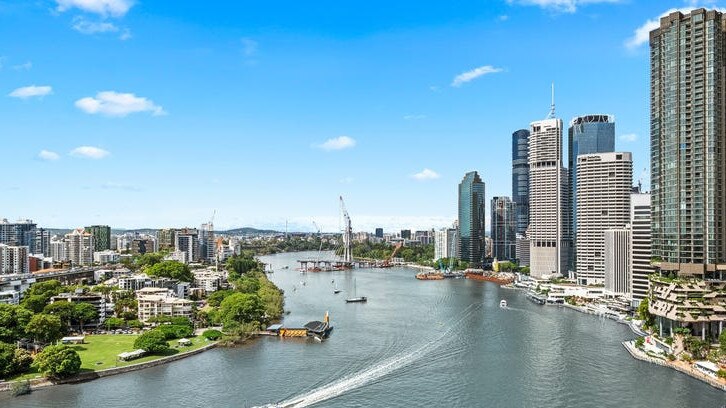
Riverfront homes now sell for six times the city median after recording a staggering 29 per cent price jump in one year, highlighting the premium high-end buyers will pay to secure a stake in Brisbane’s dwindling waterfront property. Place Advisory’s Brisbane Riverfront Property Market Report revealed riverfront home sales in Brisbane averaged $5.8m after the city officially joined the “ultra-prime” club in 2024, recording its first two sales above $20m. The report analysed the 12 months to October 2025, showing how scarcity and high-net-worth demand had reshaped real estate’s top end. Hawthorne stood out as one of Australia’s strongest-performing waterfront suburbs, with recent sales averaging more than $12m, including two $20m-plus deals. Other frontrunners Bulimba and Yeronga had average sale prices of $6.25m and $5.86m respectively. Sarah Hackett of Place New Farm said the findings reinforced the exclusivity of Brisbane’s blue-chip waterfront belt. “Buyers know opportunities are incredibly limited, and when quality homes come to market, competition is immediate and decisive,” Ms Hackett said. The agency had a swelling list of more than 9,000 buyers waiting to secure their slice of the wet stuff, she said, while just 76 detached house sales with river or water frontage were recorded in the 12 months to December 2025. The city’s residential record was shattered last month with a riverfront knockdown in New Farm changing hands for $25m. The eye-watering sum was three times what owner Rob Gray, a local developer, had paid for the 688 sqm property just three years prior, with no improvements to it since. Mr Gray said the site’s five-storey zoning contributed to the high sale. The co-director of design and build firm Graya said he was already hunting for another riverfront site. “I genuinely think I am going to regret selling it, because when I look back at this in five, ten years’ time it will look like a cheap sale,” Mr Gray said. “Even though now the sale looks so big, I still think there is so much more growth to come in inner-city riverfront blocks. “I’ve been looking to acquire another one in the last year, and noone is willing to sell which really highlights just how scarce those protected view corridors and ridge lines really are.” Ms Hackett said riverfront homes were attracting a very broad buyer pool, from local families upgrading long-term to interstate buyers who saw Brisbane as exceptional value compared to Sydney and Melbourne. “There’s a confidence in this part of the market that hasn’t wavered. Even when broader conditions fluctuate, prestige riverfront homes continue to set their own benchmarks. “Even both of my $20m-plus sales received competitive bidding. I have never seen such a tightly held market with such growing demand,” she said. uctioneer Justin Nickerson, of Apollo Auctions, said properties along Brisbane’s inner-east river bends were marked by short campaigns and very high clearance rates. Historically, waterfront properties attracted 80–120 per cent premiums over non-waterfront homes, with Brisbane’s riverfront now firmly in line with this elite category in company with Sydney Harbour and other coveted global markets. “It is a given that people are attracted to living by the water, and particularly in Queensland being a state with an active, outdoor lifestyle we find buyers will always gravitate to waterfront properties when they come to auction,” Mr Nickerson said.
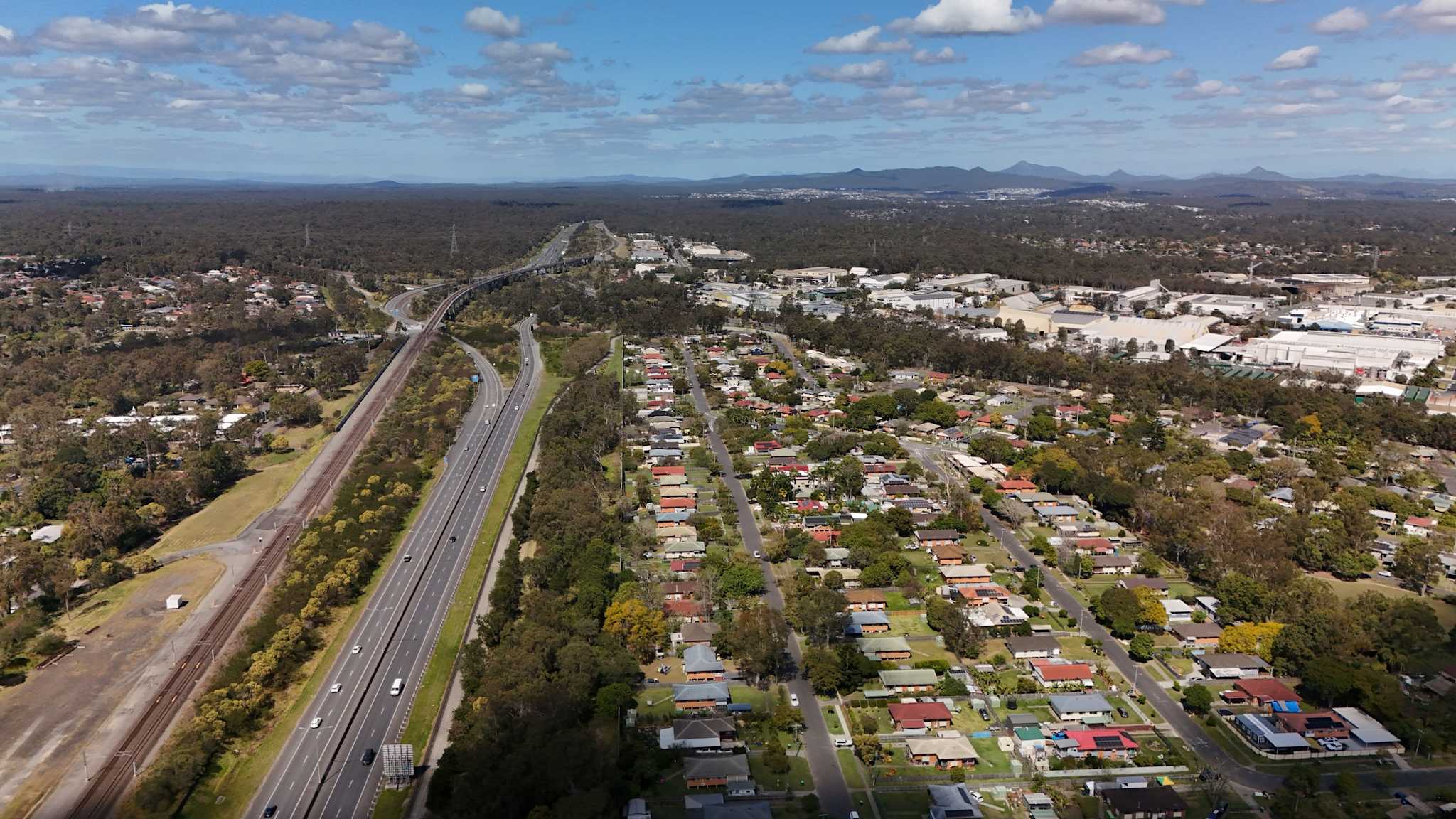
These red-hot property markets have already recorded double-digit price growth over the past year, and property experts say there’s no slowing down in 2026. There are many factors that make a suburb ‘hot’ – supply and demand imbalances, amenity, school zones, a new train line, or perhaps it’s more affordable than the next neighbourhood. The annual realestate.com.au Hot 100 aims to highlight 100 suburbs (out of more than 15,000 nationwide) with the best real estate prospects in the year ahead. Nominated by some of the country’s leading property experts, the list includes plenty of underdog suburbs set to benefit from rezoning decisions, new infrastructure or a changing demographic. But it’s not all about the turnaround story - 13 of the Hot 100 suburbs for 2026 are located within Australia’s hottest property markets of the past 12 months, suggesting these locations will continue to outperform for some time. According to PropTrack, pockets of Perth, Brisbane and regional Queensland have dominated the top ten highest growth regions over the year to November. These areas, defined by the Australian Bureau of Statistics, include Perth’s outer fringe suburbs to the north and south, regional Queensland, and Ipswich and Toowoomba in outer Brisbane. In recent months, Perth’s north east region has overtaken Townsville to become the hottest property market in the country. Property prices in this Perth pocket have surged 17.4% over the past year - just slightly ahead of Townsville’s 17.2% annual price growth. One Hot 100 suburb that sits within this top performing region is Ellenbrook , located on the city’s northeastern fringe. Nominated by LJ Hooker’s head of research Mathew Tiller, Ellenbrook is considered affordable by Perth standards – the median house price is $725,000, far lower than the capital city median of $1,013,000, while a typical unit costs $480,000. Despite already recording double-digit price growth this year, a recently completed rail extension now connects Ellenbrook to Perth’s CBD in about 30 minutes. The masterplanned suburb already had schools, shopping and community services – transport was the “missing piece” that will attract a new wave of buyers and investors. Another key factor is supply. At the time of publication, there were 62 Ellenbrook properties listed for sale on realestate.com.au, 44 of those are marked as under offer. Townsville has recently been knocked into second place in terms of annual price growth, though it’s still growing twice as fast as the national rate. According to Belinda Connor from Elders, investors will continue to underpin growth in the region in the year ahead. Mackay is the third fastest growing region in the country with annual price growth of almost 17%, yet homes remain affordable. John McGrath nominated the regional city for its lifestyle appeal, infrastructure investment and "robust economy". Further south there were several nominations in Brisbane’s Ipswich and Toowoomba regions with relatively affordable housing, strong jobs and population growth and Olympic tied infrastructure expected to continue underpinning demand. The median house price in Lowood has jumped 23% in the past 12 months to $681,000, remaining well below the capital city median of $1.15m. Nominated by REBAA Queensland state representative Melinda Granzien, Lowood’s tight rental conditions and new development activity will keep heat in the market over the short term, while a “clear demographic shift” will be a long-term growth driver as young families and tradies relocate from Brisbane and Ipswich. Rounding out the top ten hottest markets in Australia include Perth's south east and west, and the north west pocket, with Carlisle, Alkimos, Nollamara, Applecross, Baldivis and Rockingham nominated as the suburbs to watch in these regions. One key theme in these already-hot markets is that of relative affordability. Nationally, home prices have risen for 11 straight months and are sitting at record highs in most capital cities. Factors such as expanded government support for first-home buyers will continue supporting the more affordable end of the market, and the return of investors means more buyers are competing over similar, entry-level properties. But with speculation building that a rate hike could be just months away - NAB and CBA are both predicting the RBA will lift rates in February - caution will likely return to the market. On a national level, this is expected to see home price growth slow in 2026. For those looking for the next hot suburb, fundamentals will be crucial over speculation. What do fundamentals look like? Suburbs in the Hot 100 are nominated based on nine key growth drivers: Affordability , either low prices suiting buyers on a budget or relative affordability compared to nearby suburbs. Amenity , being the level of lifestyle pluses, from bars and restaurants to boutiques and parklands. Family appeal , such as dwelling type, perceived safety and proximity to good schools. Location , including proximity to the CBD or major hubs, or closeness to natural amenity like beaches. Investment prospects , from rental market conditions to expected imminent upside. Gentrification , being the changing face of a suburb. Population growth , representing a projected increase in the number of locals. Demographic change , indicating a shift from the current make-up of residents, for example young families replacing downsizing elderly locals. Infrastructure , looking at major investments in projects that will benefit the suburb or surrounds. These factors are not only expected to drive markets in the year ahead, but support price growth over the medium and long term.
The property market is expected to reach new highs in 2026 with some capital cities looking at double-digit price growth, even without any further rate cuts by the RBA. The forecasts, released in the latest realestate.com.au Property Market Outlook, predict annual home price growth of between 6-8% nationally, and as much as 10% growth in the already-hot capital cities of Brisbane and Perth. Property prices have already risen for 11 consecutive months as a series of interest rate cuts over 2025 boosted buyer confidence and activity. But a recent spike in inflation has dampened hopes for further rate cuts next year, with many economists now predicting the next move by the RBA will be up, rather than down. This won’t stop property prices rising in the year ahead, but it is expected to slow the pace of price growth according to the report, which was authored by realestate.com.au economists Augus Moore, Eleanor Creagh and Anne Flaherty. “The reasons that we're expecting to see home prices continue to grow and reach new record highs is the fact that we've already seen a few rate cuts this year, and that's still flowing through into home prices,” Mr Moore said. “The tight supply backdrop that has supported price growth this year remains, yet stretched affordability and an extended pause on interest rates are set to temper the pace of growth.” Nationally, the median home price has risen 8.7% over the past year to a record $873,000, up 51% compared to five years ago. Brisbane and Perth remain front of the pack The report includes price forecasts for six capital city property markets, with Brisbane and Perth on track for the strongest price growth of between 7-10%. Adelaide, which saw prices rise by 12.2% over the past year could see that rate almost halve as affordability constraints bite, though prices are still tipped to rise between 6-9%. Sydney and Melbourne are expected to grow a more modest 5-7%, in line with price growth recorded this past year. Hobart has a slightly broader range of 4-7% projected. A severe lack of supply in Perth, Brisbane and Adelaide is a key reason these markets will continue to outperform, with the number of active listings in these markets down around 45% from pre-pandemic levels. "Brisbane and Perth are expected to be the two best performing capital cities in 2026 with the strongest price growth forecast," Anne Flaherty said. "What we're seeing in these markets is that the rate at which new homes are being built is not keeping up with the rate at which the population is rising. These were also the fastest performing markets in 2025 and that momentum is likely to continue into next year." PropTrack data shows the top ten best performing regions of the past 12 months were all located in Queensland and Western Australia. "On the other hand, Sydney and Melbourne, which have been a little bit slower than other capitals throughout 2025 will probably continue to be a little bit slower in 2026," Mr Moore said. Without further rate cuts, affordability constraints will see Sydney’s more affordable outer and middle ring suburbs attract the bulk of demand, he said. “Melbourne is still in the process of recovering from a number of years of underperformance relative to the other capitals, which will shape its 2026 outlook.” Hobart, which is yet to return to its 2022 peak, is expected to see "a period of consolidation" rather than a renewed boom. "Affordability [in Hobart] is stretched, with prices still high relative to local incomes. Meanwhile, population growth has slowed from its earlier highs. That combination points to steady price growth and a likely reclaiming of the 2022 peak in prices, but not a return to the exceptionally fast pace of gains seen in the pandemic boom." Price forecasts were not included for Darwin or Canberra. Rising property prices drive household wealth higher New data released by the Australian Bureau of Statistics (ABS) on Thursday showed total household wealth rose by $551.3 billion in the last quarter due to rising home values. “Rising house prices were the main driver of the growth in household wealth this quarter,” ABS head of finance statistics Mish Tan said. Ms Tan noted the 2.2% increase in house prices during the September quarter was the strongest quarterly growth since 2023. While PropTrack data shows property prices have continued to rise in the months since, the pace of price growth has started to moderate. Mr Moore said the property forecasts in the report are based on a scenario where rates remain on hold throughout 2026. "While we're expecting that rates will be broadly steady throughout next year, if inflation does come in stronger than expected, that could see rates have to move higher sooner, and that would be a downward pressure on home prices," he said. Economists at two of the major banks - CBA and NAB - this week have told borrowers to brace for a rate hike as early as February, while Westpac scrapped its forecast of two further rate cuts in 2026.
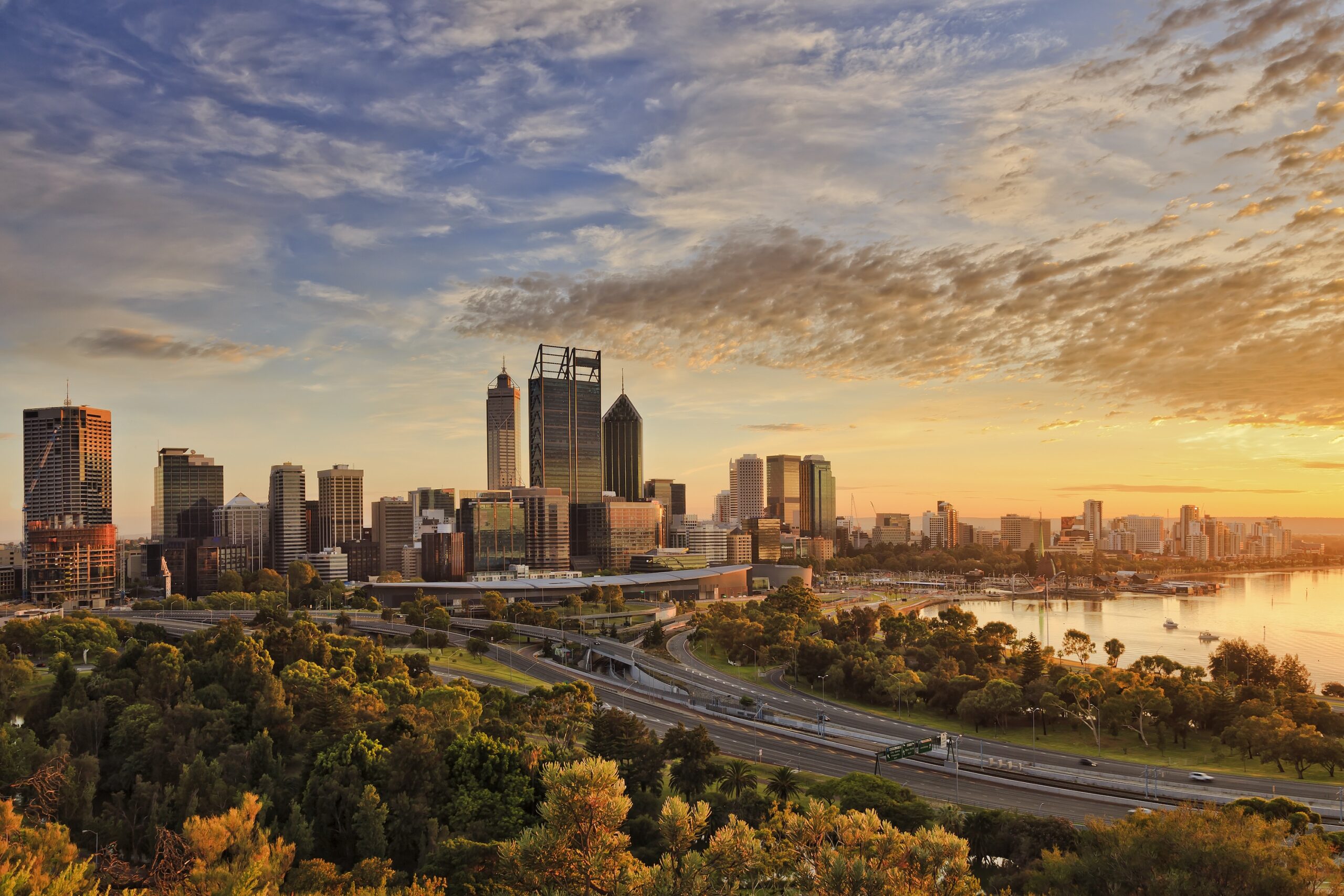
It's the fastest growing capital city of the past 12 months and new forecasts show it's set to lead home prices again in 2026. Real estate agents on the ground say there's one big reason for it. Despite being one of the most isolated capital cities in the world, Perth's property market is leading Australia when it comes to property price growth. Home prices have jumped 15.5% over the year to November to a median $930,000, PropTrack data shows, and have almost doubled in the past five years. Along with Brisbane, the latest realestate.com.au Property Outlook Report predicts Perth will continue to lead the market in the year ahead, with prices in both capital cities tipped to rise between 7-10% in 2026. Anne Flaherty, senior economist at realestate.com.au and co-author of the report alongside Angus Moore and Eleanor Creagh, said population inflows, very tight rental conditions and an undersupply of new housing will continue to put upward pressure on prices. "What we're seeing in [Brisbane and Perth] is that the rate at which new homes are being built is not keeping up with the rate at which the population is rising. These were also the fastest performing markets in 2025 and that momentum is likely to continue into next year." "The most probable path is for Perth to keep outperforming the other capitals, but with price growth stepping down from the exceptionally strong pace recorded in 2024 and 2025," Ms Flaherty said. PropTrack data shows the top ten best performing regions of the past 12 months were all located in Queensland and Western Australia. Perth real estate agent and director of Haiven Property, Sean Hughes, said while there was no doubt Perth’s property market had not cooled, it was not “all beer and skittles” with some properties taking longer to sell. “I just don't see this being a market where people are buying anything and everything just for the sake of it,” Mr Hughes told realestate.com.au “I think that if you have a very generic four by two family home in Carine, for instance at $1.5 million you should expect to have the experience - which a lot of the Perth market is in – where they’ll be hordes of people lining up and 16 offers in the first weekend.” However, more bespoke or unique properties will take longer to sell, he said. “I suppose I see the Perth market is still quite two speed. Basically, one is a white hot pace, like you are getting a speeding fine,” he said. “The other is that you can speed between the speed bumps, but at some point you've got to go 50km.” Low listings a key factor According to PropTrack, the number of active listings in Perth, Brisbane and Adelaide is down around 45% from pre-pandemic levels - a key factor behind the outperformance of these cities in recent years. Real Estate Institute of WA President Suzanne Brown said price increases were likely to continue as long as demand was high and listings remained at or near record lows. “We have continuing population growth, we have new home buyers entering the market due to the 5% deposit under the Home Guarantee Scheme; and we simply do not have the housing stock to meet the demand,” she said. “People are not listing their homes due to concerns about securing a new place to live and new home completions are not meeting pent up demand.” Ray White Whiteman & Associates Mirrabooka sales associate Justin Merendino said he was averaging a seven day turnaround from listing a home to it going under offer. With that scenario being the trend all through 2025, Mr Merendino said he could not see it changing anytime soon. “The only way it will go down and longer days on market is more stock. How do we get more stock?” he said “We've got to build more because you're giving people more choice. I'd love every house to go on the market. The problem is people are scared to sell.” With a lack of choice, Mr Merendino said people wanting to upgrade or downsize were stuck, and looking ahead into 2026 he expected conditions to remain the same. Despite a huge buyer pool, Mr Merendino said he had a strict policy of not selling homes off-market. “As an agent and my sellers agree with me, buyers get annoyed because they haven't even been allowed to do a walk through the house if you do off-market,” he said. “You close the whole market for the seller, you close the market for the buyer. Why would we do it in the market of 3000? In 15,000 maybe because everyone's got choice, but at 3000 there's not enough choice.” Xceed Real Estate chief operating officer Jonathan Marlow said due to the historic low levels of listings, off-market sales were at the highest he had ever seen. “It's very hard to argue against it for every deal,” he said. “What happens is you've got an opportunity that comes to market and they're able to get four or five offers off-market." As a result, he said off-market sales have created a “lack of visibility” in the marketplace which was causing a significant reluctance from sellers listing their homes, in turn fuelling the listings shortage. “So it's like a self-fulfilling prophecy,” he said. “We're not certain we can confidently say where the end to this is.” The areas leading the charge Western Australia and Queensland dominate the top ten price growth regions of the past year according to PropTrack, with Perth's North East recently overtaking Townsville to become the hottest SA4 region in the country. Prices in this pocket have risen 17.4% over the year to November. SA4 regions are defined by the Australian Bureau of Statistics and generally have populations between 100,000 and 500,000 people. Mr Marlow said for his agency, buyer demand was strong for suburbs across the board. “Even the far reaches like Alkimos is really going crazy,” he said. “We are seeing areas like Balcatta, Stirling, Innaloo, Doubleview going nuts...Churchlands, then even Westminster and Balga – there isn’t really anything where I can sort of sit there and go ‘this is [happening more in] one particular suburb.” Mr Hughes said there has been good demand in pockets of Fremantle representing good value, as well as Applecross, and South Perth. “And then there's coastal stuff as well, through to Trigg and North Beach which have continued to be really quite hot over the last four or five years,” he said. Looking ahead, Mr Hughes said he did not believe conditions were going to greatly improve for buyers. “Unfortunately, I see that the market is going to continue to be strong,” he said. “I can't see a glut of listings coming to the market. I don't see the building rate and the amount of homes that are constructed easing.”
Aussie house hunters have been super keen on buying into these hot suburbs in 2025, but values in the most popular areas for property buyers are separated by a multimillion-dollar price gulf. New data has uncovered the most sought-after suburbs of the past year, revealing a massive difference in prices between the popular areas topping the charts this year. While prestigious and pricey areas made the list of the most in-demand suburbs, so too did affordable suburbs towards the fringes of the capitals where buyers can find less expensive properties. The data tracks the number of key enquiries per property listing on realestate.com.au, which is a measure used to gauge the level of buyer demand in an area. Key enquiries include high-intent actions such as emailing an enquiry, calling the agent or downloading documents – steps serious buyers take when they’re interested in purchasing a property. The suburb with the most enquiries per house listing was St Marys in Sydney’s west, with a typical listing there receiving 154 enquiries. That’s almost four times the national average of 40 enquiries, indicating St Marys is extremely popular with buyers. Nearby Werrington was almost as desirable, with 149 enquiries per listing. Both suburbs have been targeted by both first-home buyers and investors recently, and with median house prices just above $1 million, these areas are more affordable than most of Sydney. The second-most popular Australian suburb of 2025 was Rocklea in Brisbane’s south, where the median house price of $772,500 has increased by almost 19% in the past year. Despite strong buyer demand causing a rapid rise in values, it’s still much more affordable than most other Brisbane suburbs. At the other end of the spectrum, houses in Point Piper on Sydney Harbour — one of Australia’s priciest suburbs — were in high demand with the uber wealthy, typically receiving more than 150 enquiries each. Only a handful of luxury houses come on the market in Point Piper each year, including this $39.5 million five-bedroom mansion and a stately sandstone home that sold for $23.5 million. Other pricier suburbs that are in high demand include harbourfront Sydney suburbs Rose Bay and Wollstonecraft, where even entry-level properties start at about $3 million and high-end homes are worth many times that figure. The data shows buyers were also eagerly enquiring about spacious semi-rural properties in Windsor Downs in the northwest and Holgate on the Central Coast, where a $2 to $3 million budget can afford a big house and plenty of land. While Sydney dominated the top 10 list of the most in-demand suburbs, affordable pockets were also sought-after in other cities. The Melbourne suburbs that had the most buyers interested were located in the city’s more-affordable north, including Coolaroo, Dallas and Campbellfield – areas in favour with both interstate investors and local first-home buyers, where houses typically sell for between $600,000 and $800,000. REA Group senior economist Eleanor Creagh said many high-demand suburbs across western Sydney and Melbourne’s outer northern suburbs provided a much more affordable entry point to the property market than those closer to the city. “Buyers are trading off longer commutes for more space and affordability, and these areas often also benefit from ongoing infrastructure investment,” she said. Ms Creagh said strong demand could place upward pressure on prices as more buyers compete over the properties that come to market.